
Hawaii Arrest Reports Across Counties
Hawaii publishes no single statewide arrest log. Honolulu, Hawaiʻi County, and Kauaʻi each post official police PDFs, but their reporting periods and archiving habits differ. Maui posts selected news items instead. No complete public booking blotter exists there. There is no state police or highway patrol roster either, and the Department of Law Enforcement news archive only shares chosen releases rather than every Hawaii arrest.
A recent arrest can drop out of view for simple reasons. The file may rotate off, the next report may not be posted yet, or the agency simply does not publish a full roster. News coverage helps, but it cannot replace the arresting agency's own report or the court record. The Honolulu Police Department public-access policy explains the daily upload routine and how dated logs rotate. That brief online window is worth remembering. Note the report date before the file disappears.
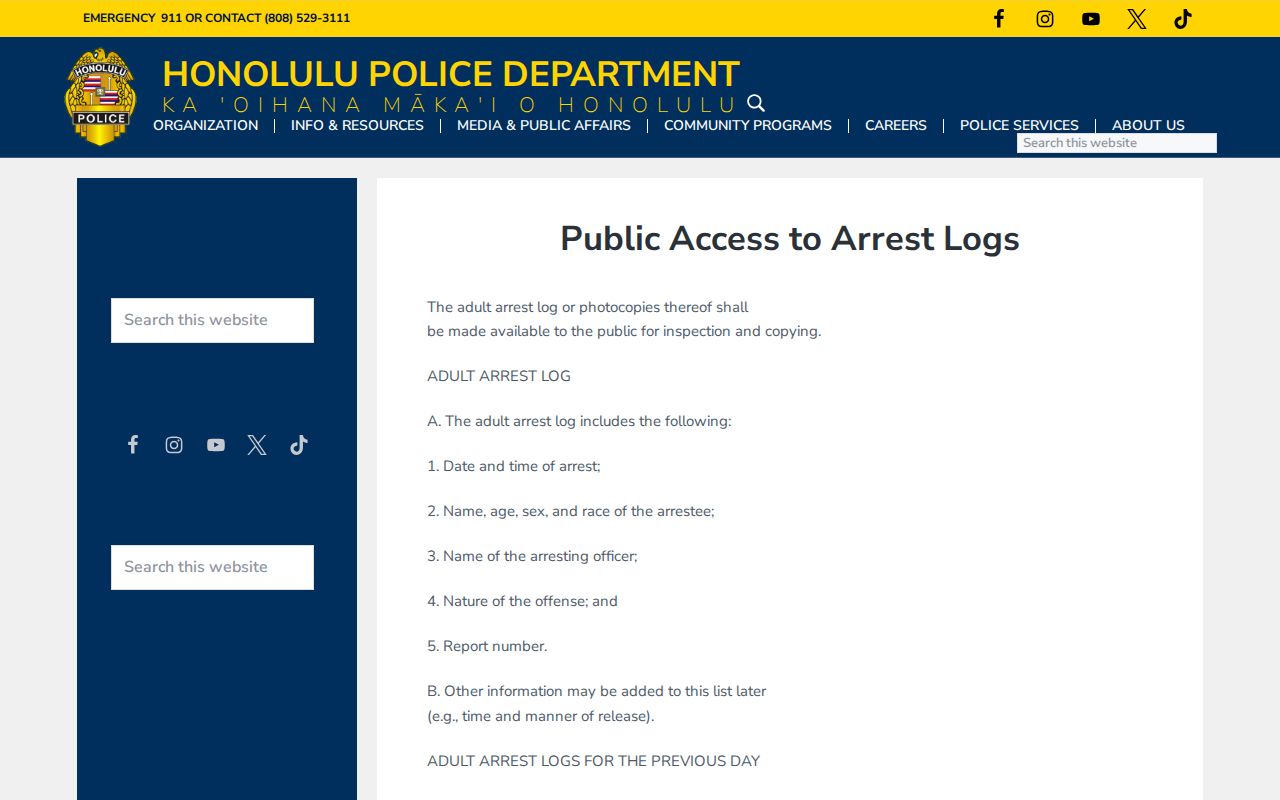
The policy covers only the public website and the Central Receiving display. It does not promise that every underlying record is destroyed once a PDF rolls off the page.
How Deep County Arrest Archives Go
Archive depth differs from agency to agency. What shows on the web is not the same as a formal retention schedule. Honolulu states a 14-day public rotation from issuance. Hawaiʻi County's page has shown roughly nine to ten consecutive dated PDFs. Each covers an overlapping 48-hour period. The page names no formal web-retention span. Kauaʻi's archive reached back about a month. It had a date gap and no promise of permanent retention. Maui offers no verified official public multi-day booking URL at all.
| County source | Observed public depth | Archive caution |
|---|---|---|
| Honolulu Police Department | Logs rotate after 14 days from issuance. | Ask Honolulu Police Department Records about an older report; the live landing page is not a permanent archive. |
| Hawaiʻi Police Department | About nine to ten dated files were visible in the reviewed sample; each covers a rolling 48 hours. | No formal web duration or holiday guarantee was found. Overlapping periods can repeat an event. |
| Kauaʻi Police Department | The observed daily-report archive reached about one month. | A date gap appeared, and no permanent online retention was promised. |
| Maui Police Department | No complete online 72-hour, weekly, or multi-day blotter was verified. | News posts are selected communications, not an empty or partial roster to fill in. |
For Kauaʻi's dated daily files, the Kauaʻi Police Department Arrest Log is the official source.
Date gaps in the sample are worth noting. A missing PDF for one day proves nothing. Whether an arrest happened that day is a separate question the PDF cannot answer. Hawaiʻi County actually lets its reports overlap on purpose. When the next 48-hour window covers the same arrest, a name can show up twice. Check duplicates against dates and charges before treating them as separate arrests. The Hawaiʻi Police Department booking-log page carries the agency’s rolling report. It also lists its current dated files.
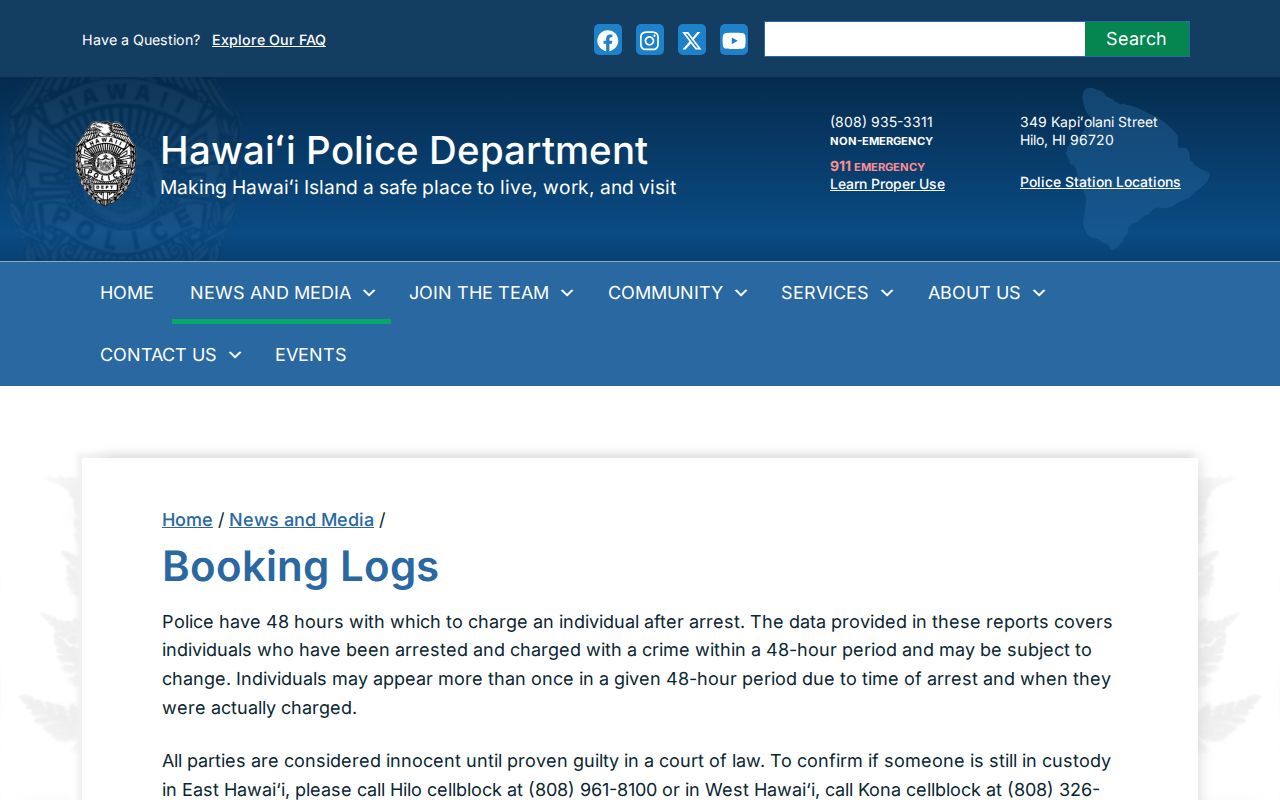
No formal online retention term covers those PDFs. An older file that is missing calls for a records inquiry, not an assumption about its status.
What an Arrest-Log Entry Shows
Statewide, no blotter shares one common data form. Trust only the fields each issuing report actually prints. Keep a report row separate from a person count. Kauaʻi’s daily log makes this especially clear, since it can list one row per charge along with release-disposition codes. Those codes only describe how an arrest was processed.
| Entry detail | How to read it |
|---|---|
| Report date and period | Marks the issue date or covered span, not always the exact arrest time. |
| Charge line | A single person may have more than one charge line. Hawaiʻi County also notes that arrest and charge times can differ. |
| Release-disposition code | Kauaʻi’s legend helps describe processing. It is not a final court disposition. |
| Photo or custody status | The reviewed public PDFs do not provide a photo gallery or a live current-custody guarantee. |
Kauaʻi’s report draws on codes. These include RBL, RNC, RPC, RPI, ROR, TOT, ISC, DCT, CCT, and PVC. Read each code against the agency’s legend. Guessing from the letters alone is a bad habit. A release marker says nothing about any later court case. It does not matter whether that case is pending, dismissed, reduced, or resolved.
The word “arrest” describes an event, nothing more. A blotter can state that police arrested and charged a person. The filed case and its disposition live in the court record instead. Public summaries may also omit protected information or details held in a different system.
How to Read a Hawaii Blotter
Read the file from its source heading outward. A dated PDF can look like a statewide list when shared online, but its agency and period still set the boundary. Start with the county that made the arrest, then use the report date and the agency’s own description before comparing entries.
- Confirm the county and agency. Honolulu Police Department and Hawaiʻi Police Department share the initials HPD, so keep their full names attached to the report.
- Read the coverage span. Separate a rolling 48-hour file, a dated daily report, and a 14-day online archive. They answer different timing questions.
- Compare the entry, not just the row. Check charge lines, report dates, overlapping periods, and Kauaʻi’s release-code legend before treating a repeated row as a new arrest.
- Follow up with the record holder. Use the County Directory to locate the right agency site, then request an older public record from that agency if its online copy is gone. For a missing Kauaʻi file, contact the Kauaʻi Police Department Records Section.
Sometimes a multi-day archive is the wrong tool. If you need to know who was arrested very recently, it may be too broad. It is also too slow. The Arrested Today report comparison breaks down the actual same-day windows. That includes Honolulu's intraday segments and Kauaʻi's next-morning file.
For a current custody question, an arrest report alone will not answer it. A person can be released before anyone reads the file. A county police log also misses later transfers into state custody. Call the right county booking or receiving unit when the question is immediate. Once an eligible record shows up in the state's custody and alert system, use that.
Weekend and Holiday Posting Gaps
Weekends and holidays run on no shared clock in Hawaii. Honolulu describes daily uploads. Hawaiʻi County's arrest PDFs were printed in the morning hours. Kauaʻi posts a next-morning daily report. None of the counties promises a separate report at a fixed hour. That holds on every weekend and holiday. These patterns prove no statewide arrest surge. A multi-day report can bundle weekend bookings. A short archive may show a gap until another PDF lands. A longer page of names can reflect report timing rather than an unusual jump in arrests. Maui's news archive is not a fallback feed for a quiet stretch.
Note: The date shown on a report is a publication clue, while a records custodian can clarify whether an older file still exists.
Hawaii News Blotters and Reporting
Hawaii newsrooms publish selected police, court, and public-safety stories, not complete arrest rosters. A story can track a case past booking. Archives still skip many arrests. A story may also change after a new court result. Start with the official county log. News adds context, not records. Hawaiʻi News Now Crime covers selected arrests, warrants, investigations, and court developments. Star-Advertiser crime coverage spans the state and Oʻahu, though some material is paywalled. Neither outlet is a roster. Civil Beat's Justice section leans investigative and analytical. KHON2's Hawaii Crime page runs selected police and court stories.
Third-party sites run thin here. Busted Newspaper, Arrests.org, and Mugshots.zone list no current all-county Hawaii sections. RecentlyBooked offers only partial Honolulu coverage. Those entries can sit stale or incomplete, so official records come first, and a news story stays editorial coverage rather than a booking record. For a factual error, contact the outlet and name the exact story; no truthful article should be expected to come down.
Older Hawaii Arrest Records and Archives
A webpage's age limit is not a retention period. Hawaiʻi State Archives retention schedules set minimum retention and final disposition for particular state record series. County police records do not follow that state-agency schedule automatically. The arresting county's schedule and the record type govern. A missing PDF has several explanations. It may have rolled off the site, been transferred, been destroyed under a valid schedule, or never existed in that form.
For modern arrest material, ask the arresting county agency for its existing report. Ask whether it was transferred or retained. If a report sits at the Archives, request the accession or finding-aid reference, the date range, the record series, and any access limit. A records request seeks an existing record. It cannot demand a brand-new statewide arrest log. The State Archives Photograph Collection and Digital Archives serve historical research. Neither is a live arrest search.
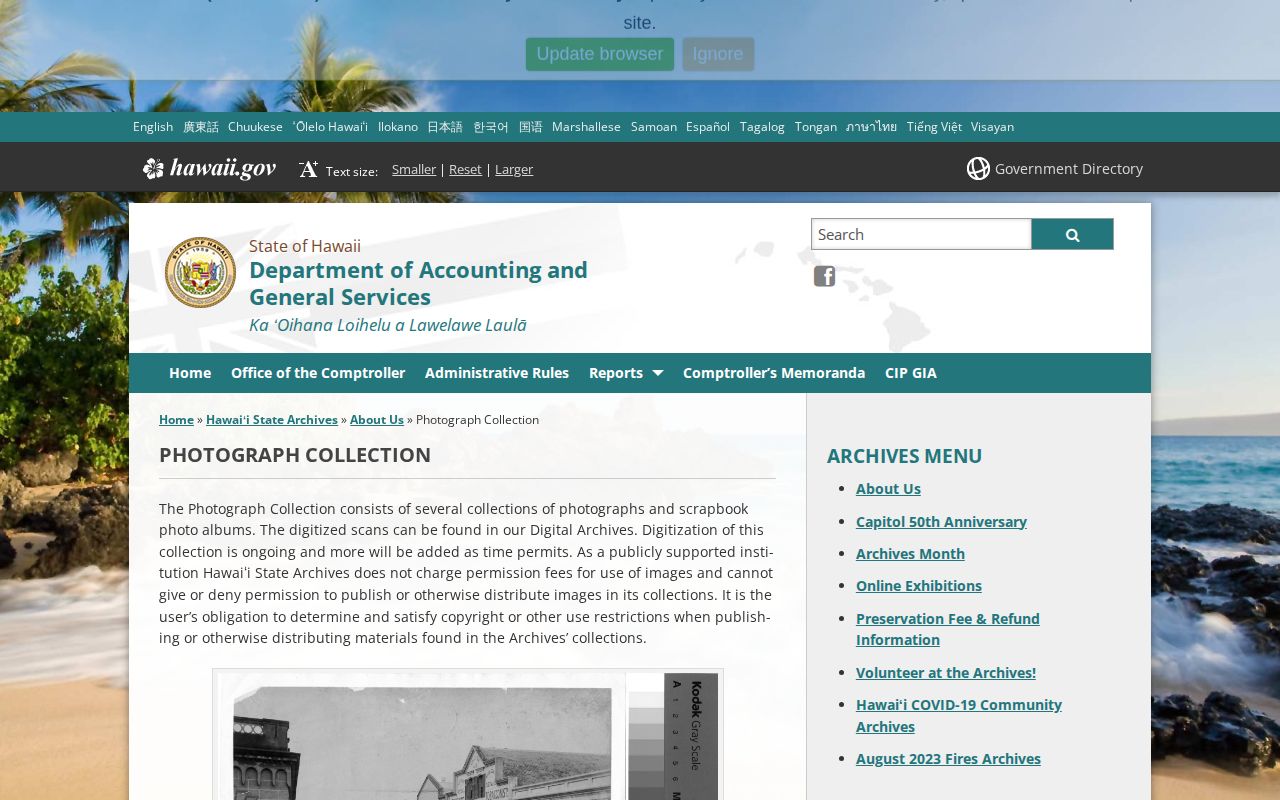
The Archives' historic corrections holdings include jail and prison material from the nineteenth and early twentieth centuries. Photographs are noted in one volume. That does not make today's county booking photos searchable there. First identify the likely collection and date range. Then ask about access and reproduction limits. Historic records may carry copyright or donor restrictions. For modern arrest reports, stay with the police custodian unless it confirms the record reached the Archives, and check the public-use rules for reading-room access and limits.
Note: A schedule sets a records-management rule for a record series; it does not promise that a public PDF will remain online for that period.