
Hawaii Arrests in the Same-Day Window
No single Hawaii arrest feed covers every island. Each of the four county police systems keeps its own record. Every public report looks different. Honolulu releases dated PDF segments as the day goes on. Hawaiʻi County posts one rolling report spanning about two days. Kauaʻi's daily list usually lands the next morning. Maui Police Department news is a handpicked story feed, not a booking roster. The State Department of Law Enforcement and its Sheriff Division publish no daily statewide arrest list at all.
One acronym trips people up: HPD. In a Hawaii County search it means Hawaiʻi Police Department. On Oʻahu it means Honolulu Police Department. Always keep the full agency name paired with its county so one island's arrest record is never mistaken for another's. Also remember that a county PDF only shows what its agency chose to publish. It says nothing about whether a person is still in custody.
The freshest Honolulu segments sit on the Honolulu Police Department arrest-log page. Four dated segments together give a workable same-day view. Still, the department promises no live feed.
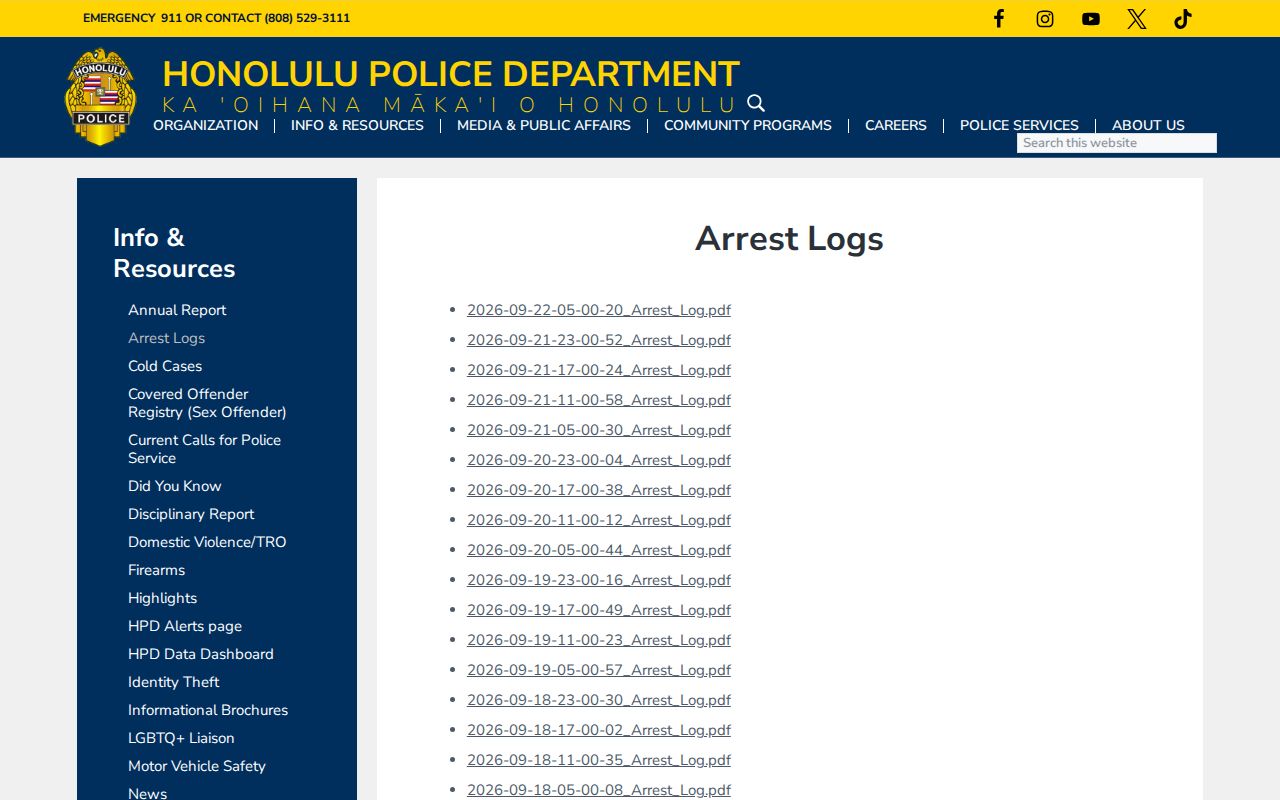
These are text and table reports, not a public gallery of booking photos. A new arrest may wait for a later segment, or stay off the public log entirely while the record is processed.
Hawaii County Report Differences
"Same-day arrest report" means something different in every county. Treat each PDF by its own dates and labels instead of assuming a strict last-24-hours list. The table pairs each county with its source, window, and photo limit. Those details change how any result should be read.
| County and official source | Published window | Photos and timing |
|---|---|---|
| Honolulu, Honolulu Police Department | Newest dated segments around four observed daily time blocks; together they form a practical latest-day view. | Reviewed PDFs are text and tables without a photo gallery. Daily uploads are described, but not minute-by-minute posting. |
| Hawaiʻi County, Hawaiʻi Police Department | Rolling report covering a stated 48-hour period. | Reviewed PDF is text-only. Reports concern people arrested and charged in the period; arrest and charge times can differ, and a name may recur. |
| Kauaʻi, Kauaʻi Police Department | Dated daily report, usually made available around the next morning. | Reviewed reports show text rows and release-disposition codes, not booking photos. The report is delayed, not live. |
| Maui, Maui Police Department | No official public 24-hour or same-day booking URL was located. | News posts are selected and may include story-specific images. They do not form a complete roster. |
| State, DLE / Sheriff Division | No daily statewide arrest or dispatch roster was located. | News releases are selective. A quiet release page is not evidence of no arrest. |
The Hawaiʻi County booking-log page shows that longer rolling period in its own labels. Don't shrink it to "the last 24 hours" just because you're checking today.
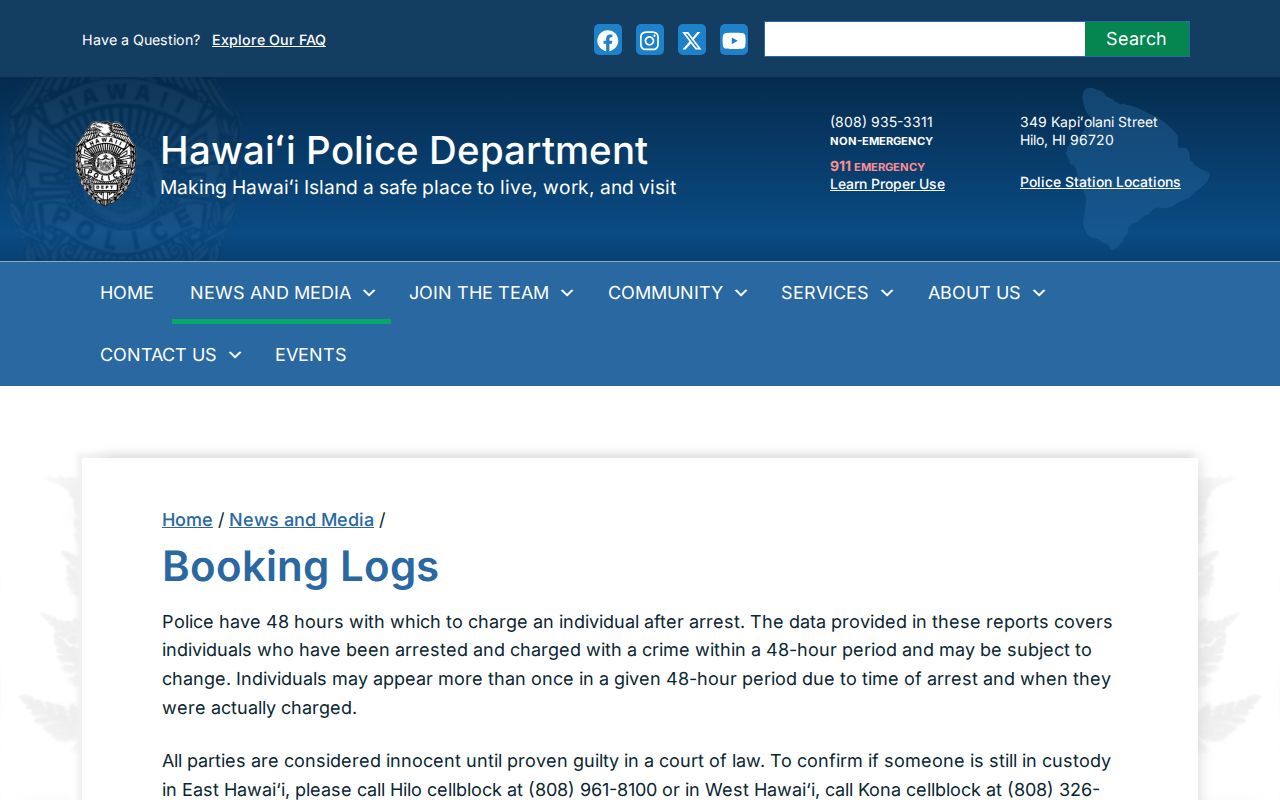
That overlap can pull the same arrest into multiple reports. The county notes that arrest and charge times may differ, so a repeated entry doesn't always mean a second arrest.
What Same-Day Reports Show
These PDFs share no statewide format, so no single field list fits every county. A few reading rules help anyway. A date on the file marks the report or its coverage window, not the moment a person was booked. Some lines list charges. Kauaʻi gives each charge its own row. That matters when you compare row counts against how many people are actually named.
| Report detail | What the research confirms |
|---|---|
| Report date or period | Read the PDF date and the agency’s stated coverage window; a daily label is not a real-time custody check. |
| Arrest and charge timing | Hawaiʻi County notes that the event and charge times can differ. |
| Charge rows | Kauaʻi’s daily report can list one row per charge, so rows are not a people count. |
| Release codes | Kauaʻi includes release-disposition codes. They describe a processing outcome, not a court finding of guilt. |
| Photo field | No public photo column or gallery appeared in the reviewed county PDFs. |
Note: The same county report can repeat an arrest across overlapping windows or show more than one line for the same person.
Never assume a log carries the same fields as a booking record. A court docket is different. So is a custody locator. A missing photo only means the public PDF left it out. It says nothing about whether the agency holds an image. A lawful records request can still be made. Each custodian reviews the record under its own access rules.
Check a Hawaii Arrest Today
Start where the arrest happened, not where the person may be held later. The county police department owns the arrest event first. Open the County Directory to find the right local site, then follow its official police link. A reposted name or photo is no substitute.
- Choose the county. Identify whether the event was in Honolulu, Hawaiʻi, Kauaʻi, or Maui County. If the location is uncertain, confirm it before judging a no-result search.
- Open the county’s own report. Use the official source in the table above. Check its report date and actual period before scanning the entry.
- Read repeated lines with care. A charge row, revised time, or overlapping report can repeat a person. Do not count each line as a separate arrest without source support.
- Ask the custodian when the report is silent. For a fresh named-person question, contact the county booking or receiving unit. For a copy of an existing record, use that agency’s records process and describe the date, county, and record sought.
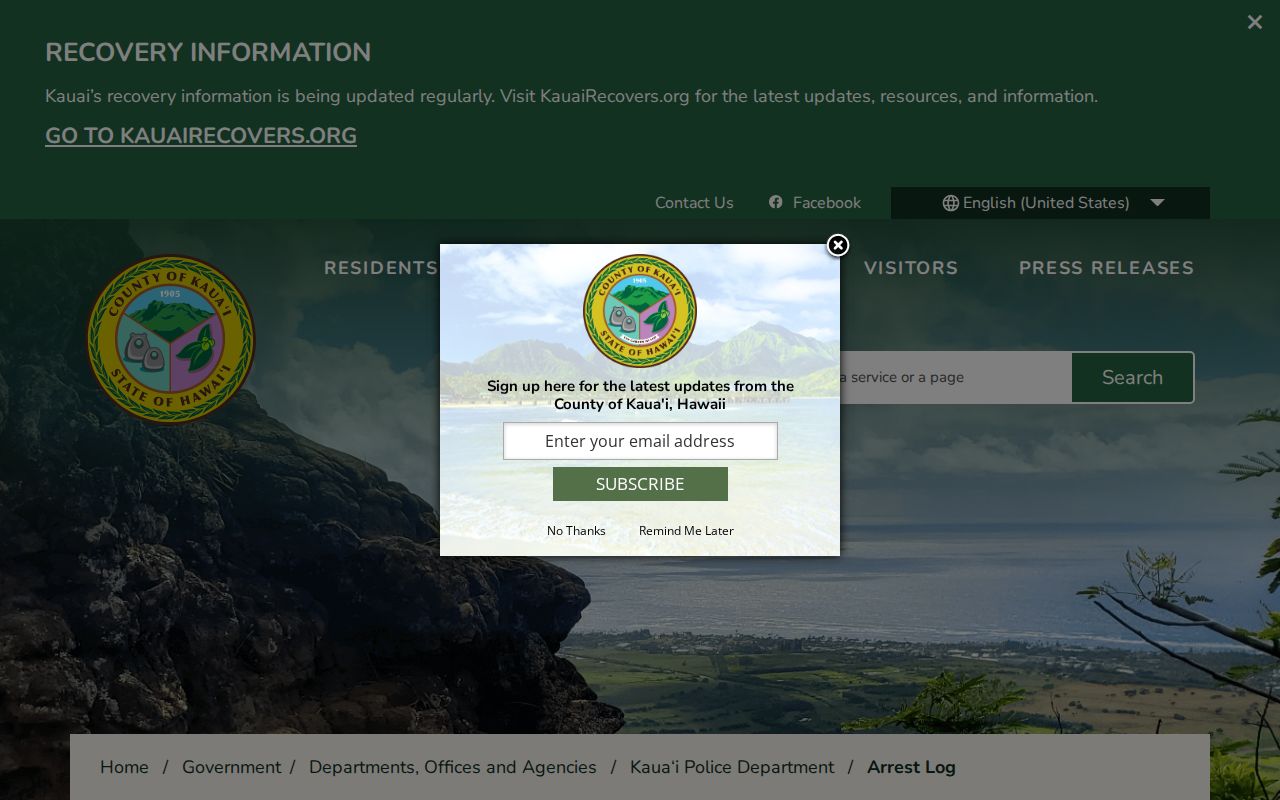
Maui works differently because it posts no complete same-day list online. For a named-person custody question, call the booking or receiving contact. For documents, go through Maui Police Department Records or the county request route. An MPD news story answers neither. The county's Police Reports request page points to that records path. Use it for existing documents. Use the booking contact for current status. Kauaʻi's daily arrest report shows why dates matter. It's usually a next-morning view. Its archive has gaps. The newest visible date may not match the arrest day you're tracking.
Say someone was arrested in Hawaii. You want to know where that person is now. Two services answer that question once the person enters covered state custody. Hawaii SAVIN and VINELink both track custody status and can send notifications when something changes.
But note the limit. State custody is a later layer, not a county same-day booking feed. A fresh police-cellblock arrest will not appear there. Neither will every county booking. When a same-day PDF shows no entry, call the county booking or receiving unit. That office remains the direct route for an immediate status question. A records request works better for documents than for real-time answers.
When a Hawaii Arrest Report Lags
A same-day arrest report is a record of a past event. It is not a live location service. Each county handles timing its own way. Honolulu posts daily uploads, so a newly processed booking can miss the segment already posted. Hawaiʻi County works from a rolling period. The arrest time there may differ from the charge time. Kauaʻi publishes the next morning. That delay is by design.
The gaps cut both ways. Someone may have been arrested before the report was ready. Someone else may have left custody by the time a reader opens the file. An entry can also change or get clarified in another agency's record later. When the answer matters now, ask the county booking or receiving unit directly.
Need an older published record? The Arrest Reports page lays out each county's multi-day window and archive depth. For a document rather than a live status answer, ask the arresting agency. That agency holds the existing report. Name the county, the date range, and the event you mean. Maui routes record requests through its Police Reports route and GovQA process. A media archive will not return every booking.
Photos in Hawaii Arrest Reports
Honolulu, Hawaiʻi County, and Kauaʻi publish daily arrest PDFs. None of them include booking-photo galleries. A photo may still surface in a selected news post or wanted notice from a police agency. Treat that as a separate editorial or public-safety release. It is not that person's official booking image attached to a roster row.
For Maui, the News and Events archive is the closest official web view. It holds selected communications, not a complete arrest roster. Read any news image in the context of its caption and date. It may be a scene photo or a supplied image rather than a mugshot.
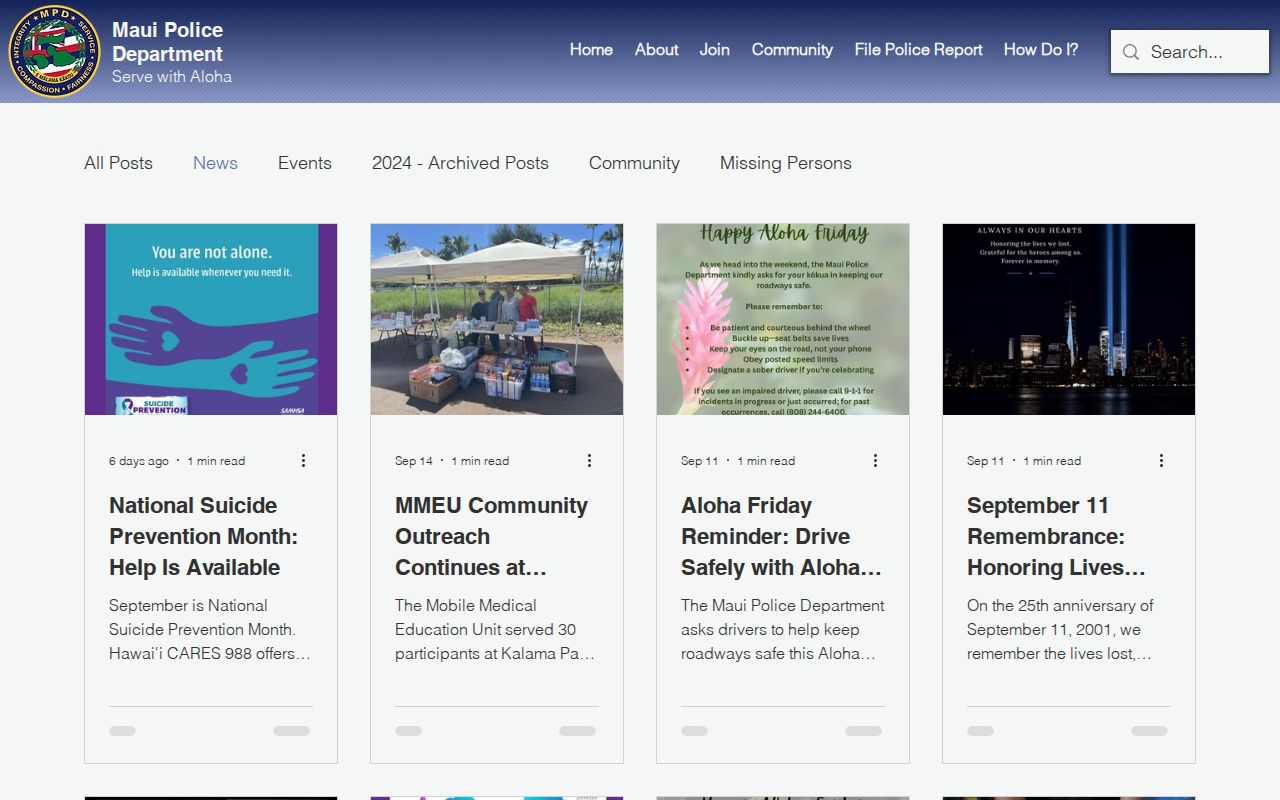
A caption and date tell you a lot. A news photo may show the scene, come from a supplied image, or serve as an illustration. It is not always a booking photo, so check the context before assuming otherwise.
Note: A county arrest report records an agency event, while a court record tracks a filed case and later disposition.